AX Platform
Solution
About Us


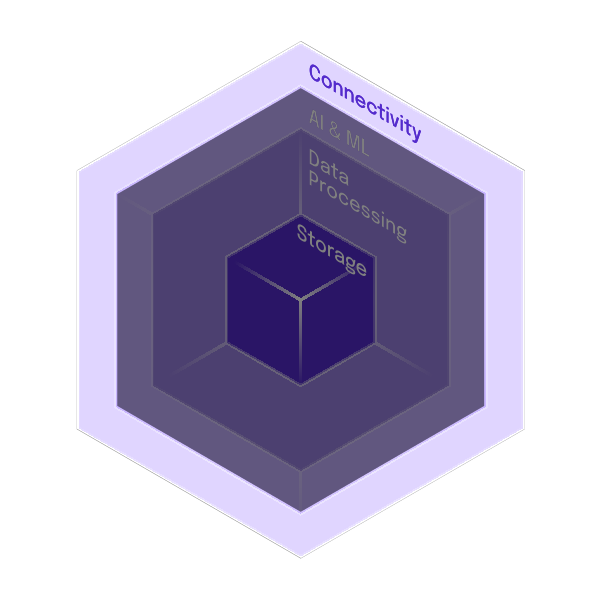
Beyond data toward intelligent connection, the core engine of NFLUX
Beyond simple Digital Transformation (DX), we lead the "AX (AI Transformation)" era where AI itself understands the environment and makes optimal decisions. Meet NFLUX's innovative platform-based technologies.

Foundational layer for physically/logically storing collected raw data and processed data.
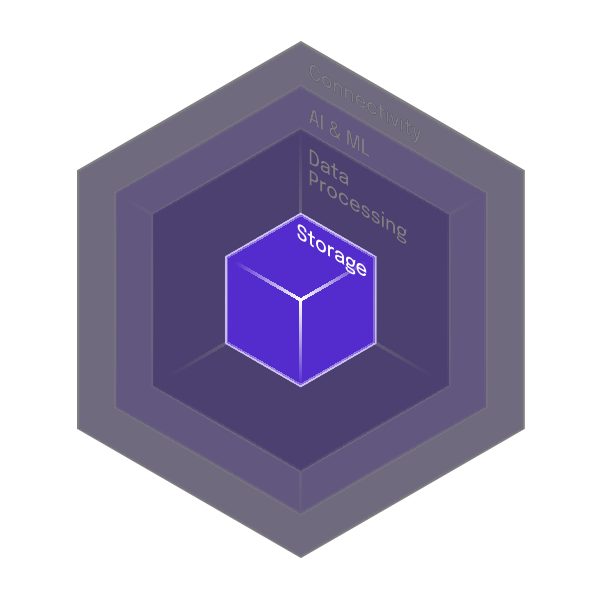
Supports both Cloud and On-premise environments, building storage that guarantees security for sensitive data.
Applies a distributed storage file system for high-speed processing of large-scale video data (CCTV) and time-series sensor data.
Supports historical data retrieval and lineage management by loading unstructured (Data Lake) and structured (Warehouse) data for specific purposes.
Core hub engine that processes stored data according to business logic and integrates it logically without physical movement.
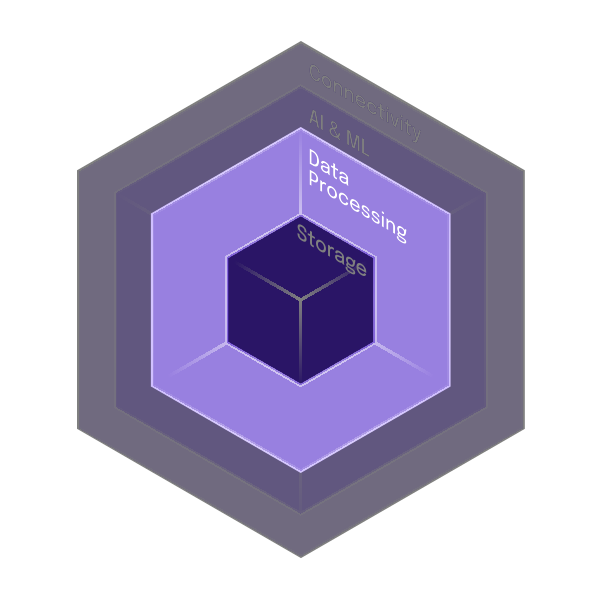
Applies virtualization technology allowing real-time queries without silos by integrating data logically without physical replication.
Guarantees bottleneck-free processing of large-scale traffic through distributed message queue processing using Kafka, RabbitMQ, etc.
Automatically transforms and refines various data formats from heterogeneous systems into platform standard specifications.
Acts as the brain, discovering patterns in processed data to predict future situations or detect anomalies.
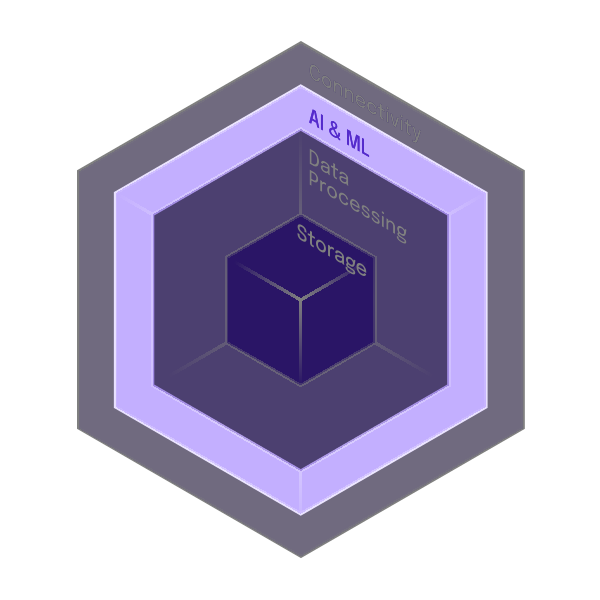
Vision AI engine performing object recognition, intrusion detection, and crowd density analysis by analyzing CCTV video data.
Drives models for predicting equipment failure (predictive maintenance), power grid status, and disaster risks by analyzing time-series data.
Secures AI reliability (based on TTA certification) by automating continuous learning, deployment, and performance monitoring of AI models.
The stage of providing analyzed data for intuitive user verification or utilization by other systems.
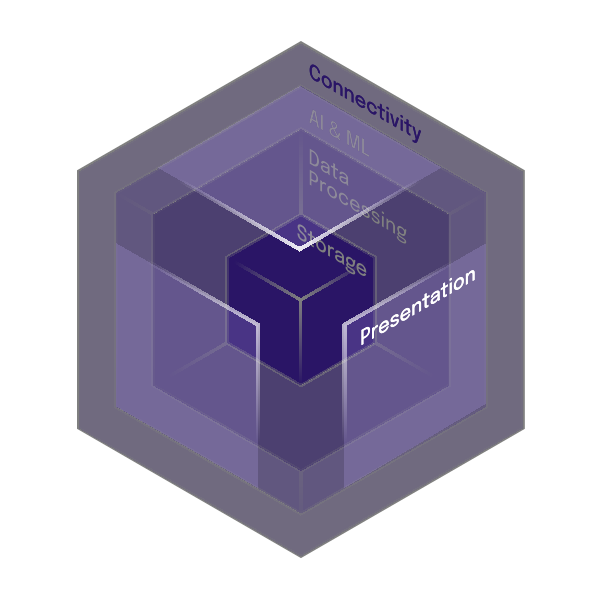
Lays the foundation for easy linkage between MAP and content layers when creating content by applying an open-source Base MAP.
Provides functionality to visualize user-configured data on the dashboard layer and intuitive device control.
Provides an accurate and intuitive monitoring environment by displaying real-time video and data reflecting locations of CCTV, sensors, etc., in actual map space.
The point of contact where all external things (IoT), systems (Legacy), and users (User) communicate with the platform. Ensures interoperability by integrating Protocol (Input) and Routing (Output) functions into one.
▪ Multi-Protocol Support: Connects instantly with heterogeneous sensors by accommodating various industrial standard protocols such as MQTT, HTTP, RTSP, Modbus, OneM2M, etc.
▪ Protocol Designer: Provides a tool to define and link new equipment protocols on the UI without coding.
▪ Open API Gateway: Provides standard APIs to export analyzed data to other institutions, third-party apps, and BI tools (Sight Booster).
▪ Smart Routing: An intelligent data routing that sends notifications to the control center (Dashboard) or field manager (Mobile) when specific events occur.
Unified storage for structured/unstructured data. Scalable distributed file system for efficient storage of large-scale source data.
Batch/real-time data collection from various sources. Integrates collection of logs, transactions, sensor data, etc.
Metadata management and data governance. Centrally manages data locations, schemas, and quality information.
Data pipeline orchestration. Ensures stable data flow through workflow scheduling and monitoring.
Large-scale data transformation and processing. High-speed complex data processing through distributed computing.
Data validation, cleansing, and standardization. Automates data quality rule application and anomaly detection.
Enterprise-grade RDBMS. Stores structured analytical data in star or snowflake schemas.
Dimension tables (Customer, Product, Time, etc.). Manages master data acting as analysis axes.
Fact tables (Sales, Inventory, Events, etc.). Stores business transactions and measurement metrics.
In-depth analysis of sales performance, customer segments, and trends.
Real-time monitoring of profit/loss, cash flow, and budget vs. performance.
Tracks operational efficiency, inventory turnover, and quality metrics.
Measures marketing ROI, customer journey, and channel effectiveness.
Open-source BI platform. Create dashboards via drag-and-drop and visualize data with various charts.
User-friendly BI tool. Explore data based on questions without SQL and generate reports.
Executive dashboards and KPI monitoring for real-time business metrics at a glance.
ML model lifecycle management. Integrates management of experiment tracking, model registry, and deployment pipelines.
Deep learning frameworks for developing advanced AI features such as prediction, classification, and recommendations.
Demand forecasting, anomaly detection, customer churn prediction based on machine learning.
Text analysis, sentiment analysis, and chatbots to extract insights from unstructured text data.
10G/40G Ethernet backbone. High-speed data transmission central switching infrastructure.
NFS/iSCSI protocols. Optimizes I/O performance via dedicated network between servers and storage.
Access control and data protection. Controls traffic between network segments and blocks external threats.
Implementation is possible in any business area where data exists.
Accommodates various protocols, provides collection and control
Supports various communication protocols (MQTT, RTSP, etc.) to seamlessly connect complex on-site sensors and legacy systems into a single platform.
Platform linkage, AI platform utilization
Utilizes distributed message queues and standard message hubs to rapidly expand infrastructure without bottlenecks when linking new equipment or systems.
Provides data openness functionality
Freely share and communicate collected/analyzed data with other institutions, third-party apps, and BI tools through the Open API gateway.
Automated response through flexible Standard Operating Procedure (SOP) writing
Based on Standard Operating Procedures (SOP), the system automatically executes situation dissemination and response procedures for specific events, reducing human error.
Flexible monitoring screen configuration
Supports responsive UI and free widget placement, allowing users to easily configure optimal monitoring screens without additional development.
E-map based customized UI/UX production
Fuses with Electronic Map (GIS) content layers to provide real-time status of CCTV, sensors, and facilities in intuitive screens tailored to user purposes.
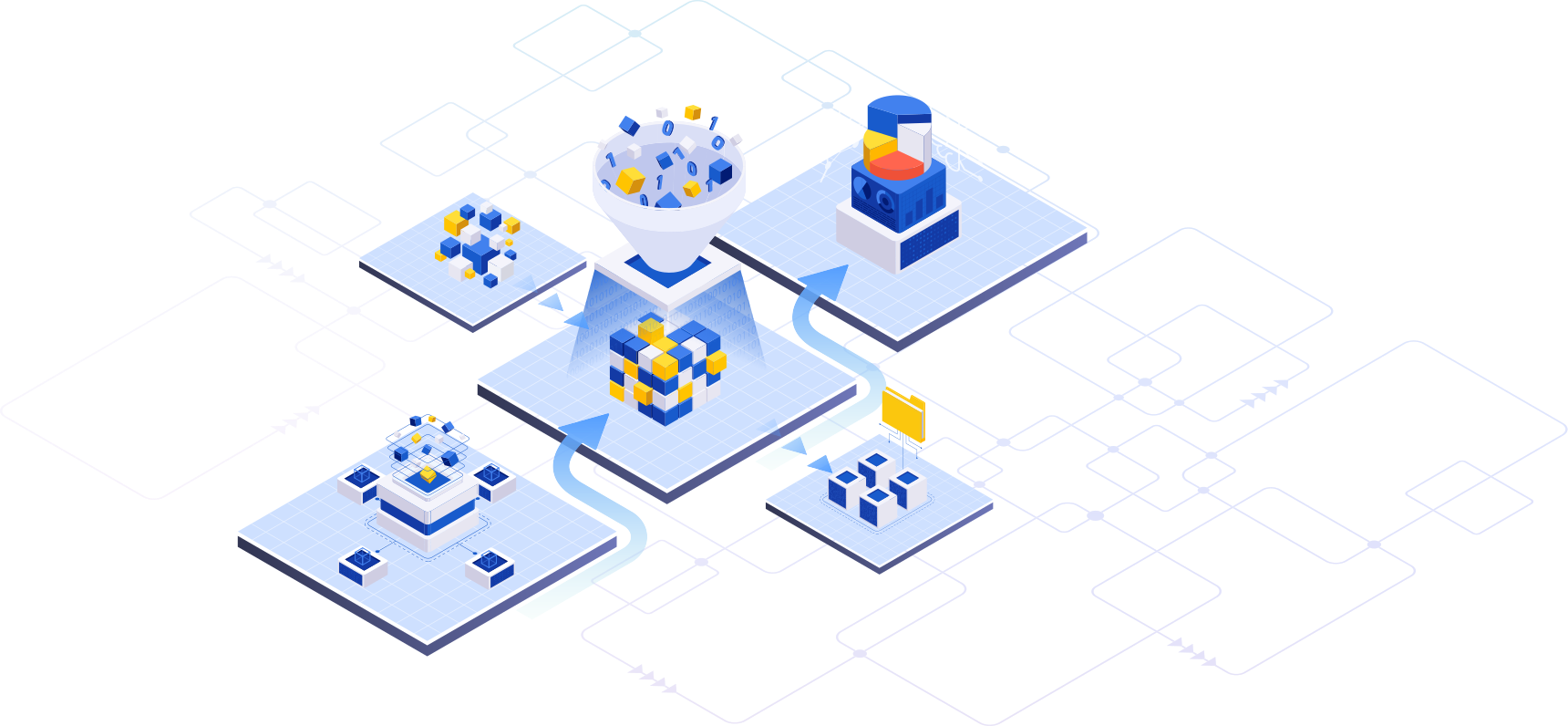
End-to-end data management solution from collection, storage, and processing to utilization.
Learn More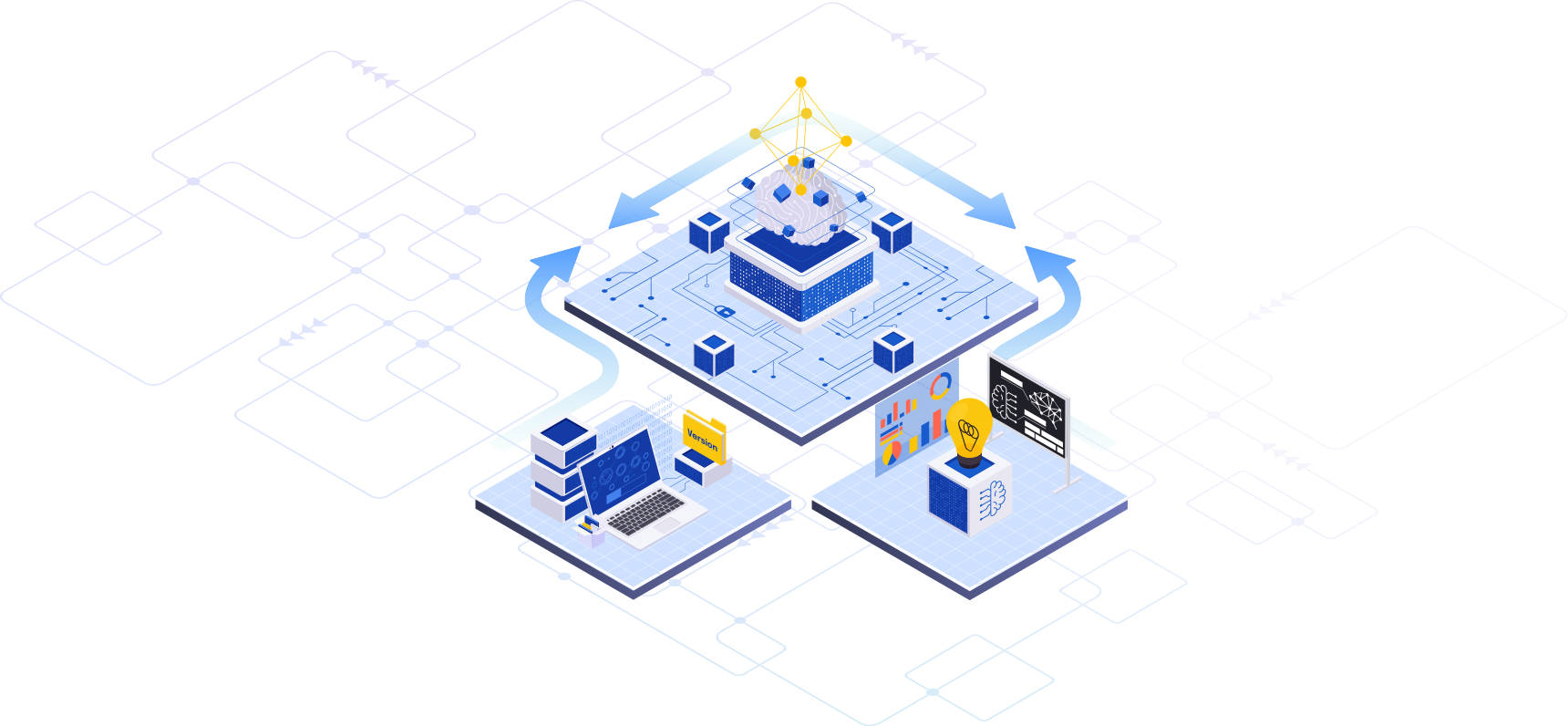
AI model training/operation automation and Agentic AI roadmap.
Learn More
Data Virtualization (DVaaS.io), Vision AI (FluxVision)
Learn More